Historian Alleges Smithsonian Prioritizes Activism Over Education After First Visit in a Decade
A museum professional contends the National Museum of American History has fundamentally shifted its mission, prioritizing activism over scholarly education.
Politics·
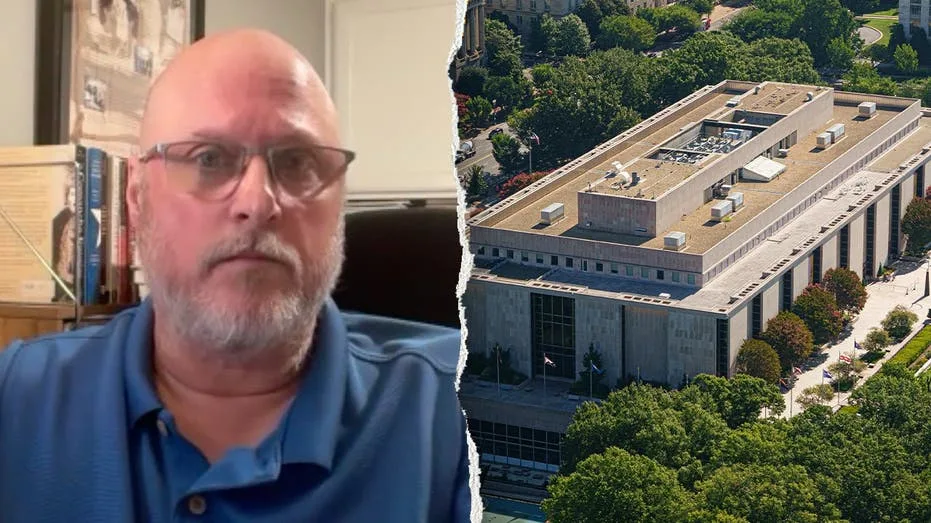
A prominent historian and museum expert has voiced strong criticism against the Smithsonian, asserting that its National Museum of American History (NMAH) has deviated from its core educational purpose to embrace an agenda of activism. This assessment follows his initial visit to the institution in over ten years, occurring amidst broader concerns from conservative circles and the previous presidential administration regarding the portrayal of American history within the museum's exhibits.
Reflecting on his experience, Ginn stated,
Its mission is clearly exactly what they changed it to be. It is a museum for activism. They use history, but that's kind of the problem.He further emphasized his view that those involved no longer function as historical scholars but rather as activists.
Ginn's decision to visit was prompted by a report from the previous administration's Domestic Policy Council. This report had criticized the Smithsonian and NMAH for allegedly failing to present historical narratives "in a way that is inspiring, unifying, and worthy of our great republic." Motivated by these claims, Ginn undertook the journey from Texas to observe the museum firsthand.
Upon entering the museum, Ginn remarked,
From the moment I walked in, it's a very different experience.He noted that this transformation was not entirely unexpected, as he had been observing a similar evolution within the museum profession for over a decade.
Observing a Shift Towards Activism
Throughout his tour of the exhibits, Ginn observed that the institution appeared to "specifically direct" visitors "to action," rather than equipping them with information to "make their own decisions." He elaborated that the objective, in his view, had shifted to transform museums from educational public institutions into venues that foster activism, a change he suggested could be interpreted as indoctrination.
While Ginn identified instances of "factually incorrect information" within certain displays, he contended that the most significant issue lay in the historical details and contexts that were omitted, deeming these omissions equally misleading. He emphasized,
The biggest problem is in what they leave out.
Ginn also expressed concern over what he described as "graphic" and sexually explicit exhibits, arguing they were unsuitable for a museum visited by children and families. He characterized these displays as "out of sync with what museums were just a few years ago." He questioned the appropriateness of such content, remarking,
These are geared towards all ages. Why would you do that? All of that's out of sync with what museums were just a few years ago.
Congressional Scrutiny and Mission Redefinition
These sentiments echoed concerns voiced by lawmakers during a recent House hearing, where they questioned Anthea Hartig, the Director of the Smithsonian National Museum of American History, about the nature of the museum's exhibits.
During the hearing, Representative Tim Burchett (R-Tenn.) specifically inquired about the exhibit titled "Illegal to Be You: Gay History Beyond Stonewall," which reportedly included a bondage harness. Burchett noted,
You have pictures of bondage, you have some overtly sexual things up there, you have transgender folks.
Legislators also raised questions regarding the 2017 MASS Action Toolkit, a resource for museum professionals. This toolkit references the 2014 police shooting in Ferguson, Missouri, and the ensuing Black Lives Matter demonstrations, while controversially characterizing "objectivity" as an element of "white supremacy culture." Ginn views this toolkit as further evidence of the museum's inclination towards activism.
Ginn characterized Director Hartig’s testimony as "very disappointing," stating it did not constitute "a scholarly presentation whatsoever." He advised,
If that's the kind of museum you've been approved to run, then just own it. Don't say you're being unbiased when it's really evident.
Ginn further criticized Hartig for asserting the museum's neutrality, arguing that its revised mission statement fundamentally "changed the purpose of that museum." In a 2024 presentation to history students, Director Hartig elaborated on the decision to remove "American history" from the museum's mission statement. She explained this change was made because it was "hard to get out of the 'America First' mentality."
For Ginn, his recent visit served to confirm what he perceives as a "massive shift" within the broader museum profession. He views the Smithsonian as "the highest-profile symptom of a process that's been going on for some time." He articulated his belief, stating,
It is my opinion as a public historian that the mission we've always had is to educate the public and provide scholarly information. To me, that's what the National Museum of American History should be.
Despite his concerns, Ginn expressed a lack of optimism for significant change within the institution. He believes a "massive effort" would be required to replace existing personnel with individuals who would prioritize historical accuracy and scholarship above political agendas. He concluded,
You're going to have to put in new people who are committed to scholarly standards and non-politicized educational programming. These people have bought into it, hook, line and sinker.
Related Stories
U.S. Intelligence Warns of Heightened Iranian Threat to Personnel Abroad
An unclassified U.S. intelligence memo highlights a substantial increase in Iranian efforts to target American personnel globally, with "lethal plotting" reaching advanced stages. This warning follows a State Department
Oct 24
Kansas Senate Candidates Clash on Immigration, AI, and Social Issues in Heated Debate
Kansas Senator Roger Marshall and Democratic challenger Adam Hamilton debated critical issues from immigration and AI to gender identity and political allegiances. The contentious hour-long exchange occurred less than
Oct 23
Supreme Court Allows New Hampshire to Reject Student IDs for Voter Verification Ahead of Midterms
The U.S. Supreme Court has permitted New Hampshire election officials to disallow student identification for voting in the upcoming midterm elections. This decision reverses a lower court's ruling, citing concerns about
Oct 23
Attorney General Blanche Does Not Rule Out DOJ Intervention in "Doomsday" Election Scenarios
Attorney General Todd Blanche suggested the Department of Justice could intervene in state election certification processes during "doomsday scenarios," while affirming no intent to improperly interfere. His comments
Oct 23