Kansas Senate Candidates Challenge Party Orthodoxy in Heated Debate
Kansas Senate rivals Roger Marshall and Adam Hamilton actively distanced themselves from their national party leaders in a contentious debate.
Politics·
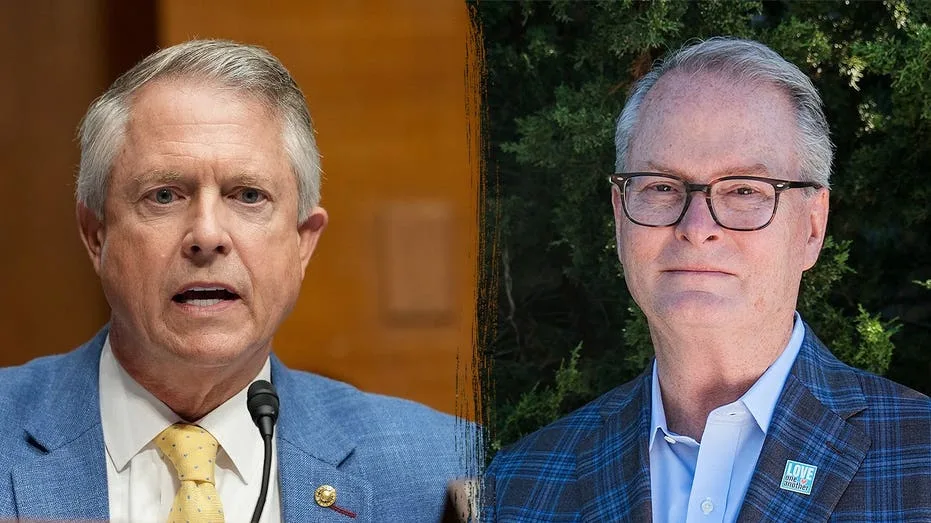
In a spirited Kansas Senate debate held Wednesday night, incumbent Senator Roger Marshall, a Republican, and his Democratic opponent, Adam Hamilton, both actively sought to differentiate themselves from the less popular aspects of their national parties. The candidates engaged in a comprehensive discussion encompassing President Donald Trump's influence, immigration policy, global conflicts, and various other issues, all within a race poised to potentially influence the balance of power in the U.S. Senate.
Personal Challenges and Public Accountability
The debate commenced with direct questions addressing controversies that have fueled campaign advertisements in the final weeks leading up to the election. Senator Marshall faced scrutiny regarding a New York Times investigation that reported his former medical practice had initiated lawsuits against over 700 patients for unpaid medical bills. The Republican incumbent defended his practice, emphasizing the significant charitable care it provided.
Every year we gave away $3 to $4 million of charity, but we also had a business. We had 300 employees, we had a mortgage payment, we had electric.
Meanwhile, Mr. Hamilton was questioned about his response to accusations concerning a volunteer at his church's summer camp, who was alleged to be a sexual predator. Hamilton acknowledged a lapse in oversight, stating he should have taken further steps to prevent the individual from returning to the camp following an initial inquiry.
I should have checked to make sure that he wasn't going back. That was a mistake on my part.
Navigating Party Lines and Presidential Influence
For a substantial portion of the debate, both candidates endeavored to characterize their opponent through the lens of their national party affiliations. Senator Marshall repeatedly cautioned that electing Hamilton would contribute to Democrats gaining control of the Senate and elevate Senate Minority Leader Chuck Schumer to a leadership position. Conversely, Hamilton aimed to present himself as an independent-minded Democrat, prepared to diverge from his party's established positions.
This ideological distinction became particularly evident when the moderator presented footage of former President Trump campaigning for Senator Marshall in Kansas earlier in the week, urging voters to "pretend, please, that I'm on the ballot." When asked if this implied full endorsement of Trump's agenda, Marshall demurred, citing recent disagreements on issues such as immigration enforcement in southwest Kansas and beef imports.
Just like with my wife, I can disagree with her. My wife is always right. And President Trump is not always right.
Despite these stated disagreements, Marshall underscored his broad support for the former president's platform and encouraged Trump's base to turn out and vote for him.
We need the Trump voters to come out. If you want the Trump agenda to continue, if you want secure borders, if you want a strong military, if you want lower taxes, then you — and you voted for President Trump — you need to come out.
Hamilton encountered a similar challenge when moderators pressed him on his history of supporting Democratic candidates and his campaign's stated philosophy of "leading from the middle." The Democratic nominee explicitly distanced himself from former President Joe Biden's policies on immigration.
The Biden policies when it came to the border were a disaster. I believe in strong and secure borders.
Additionally, Hamilton affirmed that he would not support Senator Schumer for majority leader should Democrats secure control of the Senate.
Consensus on Social Issues
The debate featured a rare moment of bipartisan agreement when both candidates were asked about the number of genders. Senator Marshall stated:
There's two. There's a boy and there's a girl.
Mr. Hamilton offered a similar perspective, responding:
There are two genders, male and female.
Hamilton further elaborated on this topic, expressing his opposition to biological males competing in sports against his 12-year-old granddaughter, describing it as "not a fair fight." He maintained that decisions regarding athletic participation should generally be made at the local level rather than by the federal government.
The Stakes in Kansas
The Kansas Senate contest has unexpectedly emerged as a highly competitive race in the final period of the midterm election cycle. Senator Marshall is seeking his second term representing a state that has not elected a Democratic U.S. senator since 1932. Hamilton, a long-serving pastor, has centered his campaign on a moderate Democratic platform. The significance of the race was highlighted by former President Trump's visit to Kansas on Monday to rally support for Marshall, as Republicans work to retain the seat amidst the broader struggle for Senate control.
Related Stories
U.S. Intelligence Warns of Heightened Iranian Threat to Personnel Abroad
An unclassified U.S. intelligence memo highlights a substantial increase in Iranian efforts to target American personnel globally, with "lethal plotting" reaching advanced stages. This warning follows a State Department
Oct 24
Kansas Senate Candidates Clash on Immigration, AI, and Social Issues in Heated Debate
Kansas Senator Roger Marshall and Democratic challenger Adam Hamilton debated critical issues from immigration and AI to gender identity and political allegiances. The contentious hour-long exchange occurred less than
Oct 23
Supreme Court Allows New Hampshire to Reject Student IDs for Voter Verification Ahead of Midterms
The U.S. Supreme Court has permitted New Hampshire election officials to disallow student identification for voting in the upcoming midterm elections. This decision reverses a lower court's ruling, citing concerns about
Oct 23
Attorney General Blanche Does Not Rule Out DOJ Intervention in "Doomsday" Election Scenarios
Attorney General Todd Blanche suggested the Department of Justice could intervene in state election certification processes during "doomsday scenarios," while affirming no intent to improperly interfere. His comments
Oct 23