Global Immigrant Visa Interviews Halted for Training on Public Charge Rule
The measure temporarily delays applications at the interview stage as U.S. diplomatic staff learn new guidelines for determining potential reliance on public assistance.
Politics·
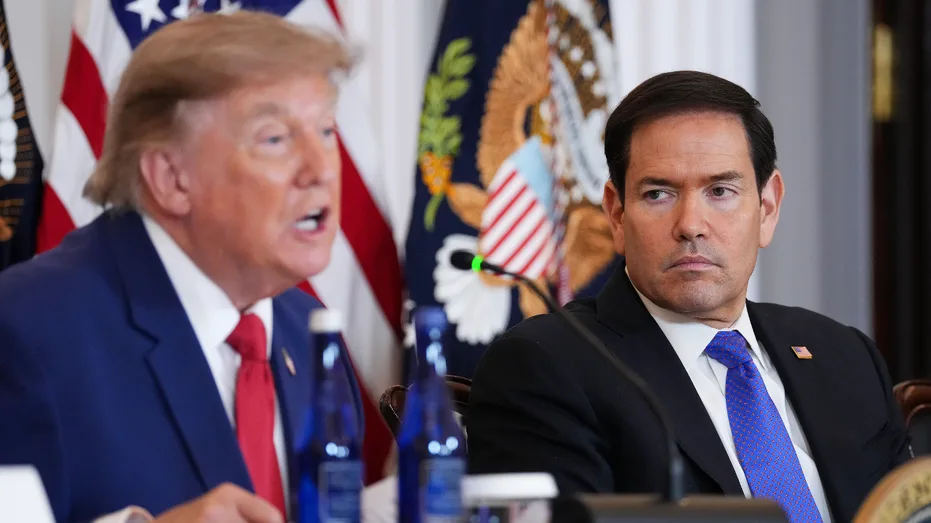
The U.S. government has instructed its diplomatic missions globally to defer immigrant visa appointments. This directive aims to allow consular officials to undergo specialized training regarding updated public-charge guidelines, leading to a temporary suspension of applications that have advanced to the interview phase.
Under federal immigration statutes, an individual may be deemed inadmissible for an immigrant visa if authorities determine they are likely to become a public charge, meaning they could become reliant on specific forms of government assistance after entering the United States.
Applicant Uncertainty and Administrative Response
A State Department representative confirmed the rollout of a "global training initiative" for all U.S. embassies and consulates earlier in August. They explained that "appointments for visa services will be adjusted" to facilitate this "in-depth training," which seeks to ensure that assessments of visa applicants are conducted "comprehensively and consistently."
The majority of diplomatic posts are slated to conduct these training sessions during the current week.
The State Department has not yet provided information on when impacted applicants will receive new interview dates. This lack of immediate rescheduling instructions has created considerable uncertainty among those who received cancellation notices, informing them only that they would be notified of a future date without a specific timeline.
Broader Immigration Enforcement Efforts
This latest action aligns with the administration's broader push to tighten immigration policies, a campaign that has increasingly encompassed legal immigration avenues, not just undocumented immigration. While the President's 2024 campaign emphasized reducing illegal immigration, his administration has also introduced more stringent rules for legal immigration, such as increased fees for specific work visas and new duration limits for certain foreign students and journalists residing in the United States.
Furthermore, the administration has initiated visa revocations and deportation proceedings in instances related to political expression and activities, notably involving some activists critical of Israel. These measures have led to legal challenges asserting infringements upon free-speech and due-process rights.
On Monday, the government announced its intent to revoke business and tourism visas for as many as 200,000 foreign nationals who have either applied for or are seeking asylum in the U.S. If enacted, this policy would constitute the most extensive mass visa revocation in the nation's history.
However, the administration's immigration agenda has also encountered legal obstacles. Just last Friday, a federal court judge invalidated a State Department regulation that had suspended the issuance of immigrant visas to individuals from 75 nations. The judge determined that this particular policy overstepped the statutory authority granted to Secretary of State Marco Rubio.
Related Stories
U.S. Intelligence Warns of Heightened Iranian Threat to Personnel Abroad
An unclassified U.S. intelligence memo highlights a substantial increase in Iranian efforts to target American personnel globally, with "lethal plotting" reaching advanced stages. This warning follows a State Department
Oct 24
Kansas Senate Candidates Clash on Immigration, AI, and Social Issues in Heated Debate
Kansas Senator Roger Marshall and Democratic challenger Adam Hamilton debated critical issues from immigration and AI to gender identity and political allegiances. The contentious hour-long exchange occurred less than
Oct 23
Supreme Court Allows New Hampshire to Reject Student IDs for Voter Verification Ahead of Midterms
The U.S. Supreme Court has permitted New Hampshire election officials to disallow student identification for voting in the upcoming midterm elections. This decision reverses a lower court's ruling, citing concerns about
Oct 23
Attorney General Blanche Does Not Rule Out DOJ Intervention in "Doomsday" Election Scenarios
Attorney General Todd Blanche suggested the Department of Justice could intervene in state election certification processes during "doomsday scenarios," while affirming no intent to improperly interfere. His comments
Oct 23